2026: Friction’s The Mission
Growing up, I suspected I possessed psychic powers, blessed primarily with the gift of daydreaming of a specific Pokémon or Scooby Doo episode in class only to see that episode playing on my TV later that day after school. This, coupled with a preternatural gift for telling time down to the minute, made me want to believe myself capable of magic, able to accomplish feats that would surprise not just my peers, but me as well. Aging and years of short-sighted decisions have taught me the future might not be as in my sights as I previously thought.
Still, there are times when I suspect there might be a smidgen of Sylvia Browne in my system. Just a few months ago, much discussion was had around New Year’s resolutions and trend predictions. I tend to keep those predictions to a minimum, as long ins and outs lists read like people trying to make anything stick. This year my two main ‘outs’ complemented each other: streaming music and the concept of convenience. I shared these feelings with a friend, who a few days later shared this Cut article about “friction-maxing.” Suddenly, I’m getting deja vu of 3rd grade, where I could predict which talisman episode of Jackie Chan Adventures was coming up next.
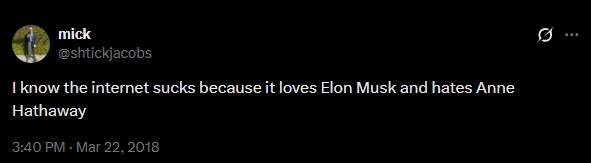
As a general statement, Kathryn Jezer-Morton’s Cut piece overviews the problem I, too, notice about daily life: that extreme convenience is ruining it. She touches on the subject of delivery apps and AI chatbots, about how they reduce one’s ability to not only perform certain tasks like grocery shopping, cooking, and thinking but also facing hardship, problems, or challenges. This aversion to difficulty makes people weaker, slower, and generally more selfish. Nowadays in modern America, struggle looks to many people less like typhoid or crop failure and more like writing letters, going to the grocery store, or engaging with art, a song if you will, that might make them think.
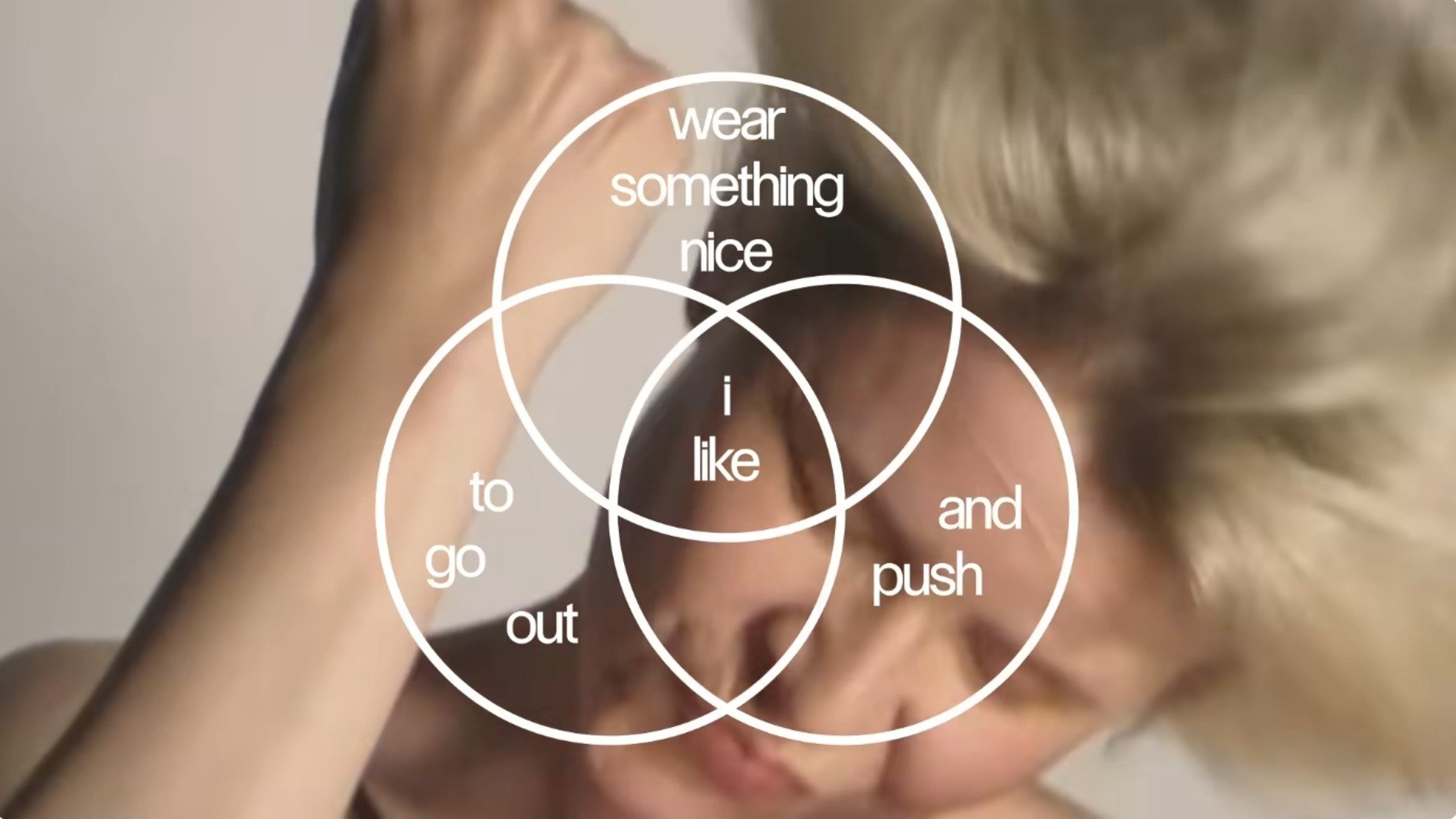
Standing in stark opposition to easy listening is the title track from Robyn’s upcoming Sexistential. Abrasive and choppy, “Sexistential” sounds like effort: “I like to go out, wear something nice, and PUSH.” Going out (touching grass), wearing something nice (quality cannot be found on Shein or Temu), and pushing (putting in the work) are muddled with vocal distortion, as if to mirror the friction, or even fear, one faces when taking a risk, putting oneself out there, living. A lot of people did not like this song, something her publicist mentioned to me, a take I find interesting when you consider many of Robyn’s catchiest songs involve her talking or using her speaking voice to supplement the beat.
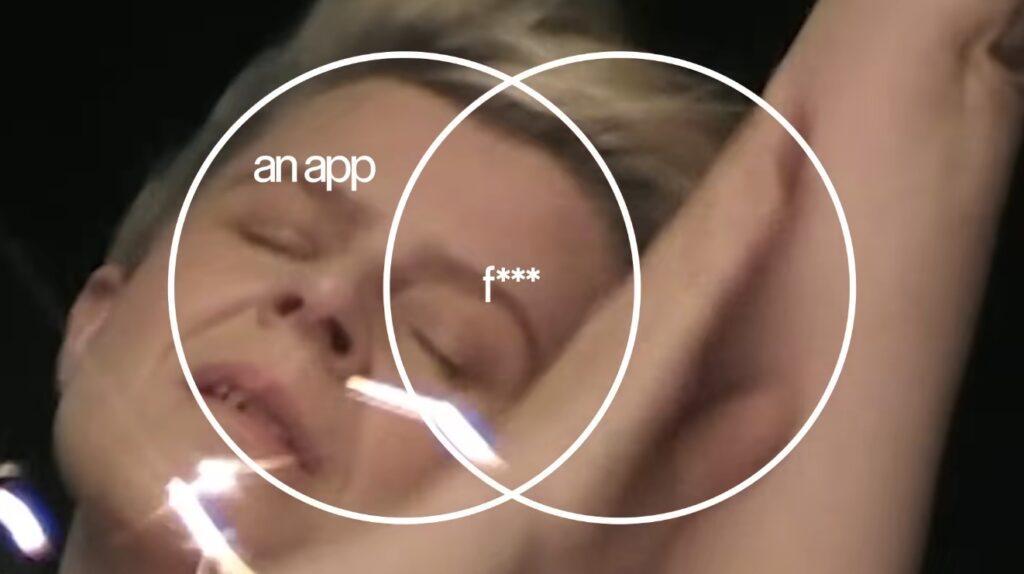
The song presses forward with a steely, clangorous attitude that agitates more than it excites (“It’s existential” is how it ends, after all). The way Robyn’s voice lags just behind the beat makes the tempo tough to discern, and once you do, the lyrics aren’t exactly “sexy.” Combined with its spiky production, “Sexistential is quite a challenging song, and that’s where the fun lies. Sex can’t happen without friction, the very thing Jezer-Morton sees people taking any measures to remove from their own lives. People shirk away from friction, and the more that they do, the harder every effort becomes. Since most humans no longer must be capable of hunting, now they find ways to avoid the “gathering” aspect: gathering groceries, knowledge, a better understanding of the world we live in. Soon enough be it difficult situations, conversations, and choices, and often in doing so perpetuate systems that make them dissatisfied in newer, more banal ways.
Where I see it as an issue in my work as a music publicist is streaming, a thing exemplified most by the entity known as Spotify.
It goes without saying that Spotify is neither ethical nor sustainable as a service. It has absolutely poisoned people’s valuation of music, decimated their ability to discover it for themselves, and invested itself in nefarious technologies and organizations. Just a few days ago, it got added to the BDS list. Its creator Daniel Ek generally just sucks, too. Observing these standpoints alone, it behooves you to cancel your Spotify subscription.
Digging deeper, let’s look at the “convenience” of streaming, and why it’s not really making things easy for the consumer either. A Spotify plan is not cost effective. On the lower end, a student paying $5.99 will pay $335.52 over four years. Assuming albums on iTunes cost around $9.99, ~$335 could buy you about 33 albums. Divide the number by four, and you have eight albums per year; assuming again that an album consists of 10 songs, this averages out to 80 songs purchased, $80 dollars more or less in iTunes metrics.
I am going to go out on a limb with this next assumption, that the average user is not seeking out that many new songs in a year. If I may ask, is your 2026 Wrapped that different from 2025’s, ’24’s, or ’23’s? Going further, I’d say the average person usually just listens to the average album, the latest Sabrina Carpenter, Doja Cat, or 21 Pilots record, which is typically available at the local library. And that’s assuming these listeners sit through the whole album, something some Pitchfork writers “can’t bear to do.” A survey of users on Deezer, another listening service and certainly more of an ‘audiophile’ base, found that only 50% of them listened to albums all the way through; this study being five years ago makes me think that number’s likely grown as attention spans shrink. If the diehards aren’t doing it there’s no way the normies are Spotify are putting on the whole album, either; they’re just getting the singles to go on their playlists.
So, say you take 3/4 singles from the ten biggest albums of the year: that averages out to 40 tracks at the most. If we say that individual tracks cost .99 cents, this totals out to around $40 dollars, which means a student pays an extra 40 dollars a year for music. That’s just if you’re on the discount plan; pay the usual $12.99 a month, and you’re spending $155 dollars a year; I doubt most people are listening to more than 100 new songs in a year. And if trends continue, you’ll continue to pay more and more each year.
If the density and mathematics involved in the previous paragraph felt like an effort to read, perhaps that’s a good thing. Growth and development require work and discomfort – friction, if you will. As the gym saying goes, no pain, no gain. As life continues on during the global ascendance of fascism, people must face some inconvenient truths. For those of us in the music industry, it means considering our listening habits.
Last month, one of the hottest Grammy parties was put together by the same streaming service so many people took to the Internet to denounce this past year, especially recently as ICE raids surged throughout the country. It makes you wonder how many people who attended Spotify’s Best New Artist party wore an ICE Out pin to the formal ceremony only days later.
Sorry to yuck some yums, but it was jarring to see so many people posting videos from a party thrown by a company that’s simultaneously been (rightfully) dragged in recent memory for making the world veritably worse. Please bear in mind that I say this as someone who, just months earlier, went to a special performance thrown by the same company for Robyn’s big comeback. I’m not immune to the convenience of turning a blind eye, either.
The audiophiles, people who should be ideal streaming users, seem less and less pleased with it these days. A writer for the CBC back in 2023 remarked how her love of CDs dwindled when the iPhod debuted but has since rushed back as streaming services feel both overwhelming yet fleeting: “The older I get, the more everything feels a little less permanent.” More recently, a Tom’s Guide writer admitted to crawling back to Spotify after ditching it for Qobuz. Despite returning to Spotify again, her article hardly sounds like a win for the platform. She ends the article on lukewarm feelings, and shares in the comments that she’d eventually like to leave altogether. Furthermore, her critiques of Qobuz feel, to me, largely superficial (less individualized playlists to search from) or something she’ll remember she encountered at Spotify too (overwhelming choice). Chasing some friction might rectify some of those Qobuz qualms; convince your friends to sign up because it’s a more ethical payout system, and bam, you start solving your playlist problem.
Of course, that presumes streaming is the answer, something I’m less likely to believe and which is not necessarily an old-head opinion either. It not only encourages terrible listening habits, but it is also gluttonizing. It becomes harder to see the value in something when it comes so easily, and in the case of streaming, so cheaply. Pay ~12~ dollars a month for enough song to soundtrack eternity (either Spotify or Qobuz, TIDAL, Apple Music, all are relatively comparable in pricing per month( and before long the brain can’t conceive paying that amount to own an album, or purchase 10-or-so mp3s that’ll outlive any streaming service, CD player, or vinyl record. Cost-wise, you also end up paying what I believe to be more on music a year than if you dedicate yourself to building a physical, or in my case digital, library of your own.
To put this in perspective, a person pays about $140 a year for all the songs in the world, only to listen to, based on my metrics from before, about 100 songs a year, with about 40 of them being new songs. Last year, I paid a total of $8 on recorded music, which I spent on Bandcamp Friday. In total though, my mp3 library grew by over 1,000 songs, 1,020 to be exact and 83 of those were songs released in 2025, and it cost 5% of what people pay a year in streaming while being double the number of new songs that the average streaming listener is seeking out.
Doing all this is not exactly convenient – you must wait for CDs to come through at the library, you need to organize mp3s like you would any physical media, and, perhaps most impactful for someone in the streaming age, your listening choices dwindle considerably.
Taking the route less traveled, aka the tougher one, can lead to not just improvements but full-on attitude shifts. When “Sexistential” begins, it consists of a sparse, sinking beat and Robyn’s inelegant delivery. As the song carries on, an almost irritating little melody tacks itself onto the production, teasing the brain as her voice grows cruder and combative. But by the time the third verse comes around so does a held synth tone that warms the track. Robyn herself feels both gentler with and more assured of herself: “Do I have the consistent will to persist and finish this ride?” reads less like a question and more like a realization. It’s by persevering through the hard shit that a person learns not only learn that they can handle it – they learn what they are capable of. Robyn herself revealed that she took it as a challenge to write a banger about her IVF process after hearing Andre 3000 express disbelief that anyone would enjoy a song about his colonoscopy.
Across this press cycle, Robyn has espoused a frank acceptance of friction and discomfort as part of the creative process. In a star-studded Q&A panel for the Cut, she cites pain and pleasure as points of reference, specifically the ways she manages to transition herself from the former to the latter. When asked by Jerry Saltz about facing fear in the writing process, Robyn gets to the heart of what I’m talking about:
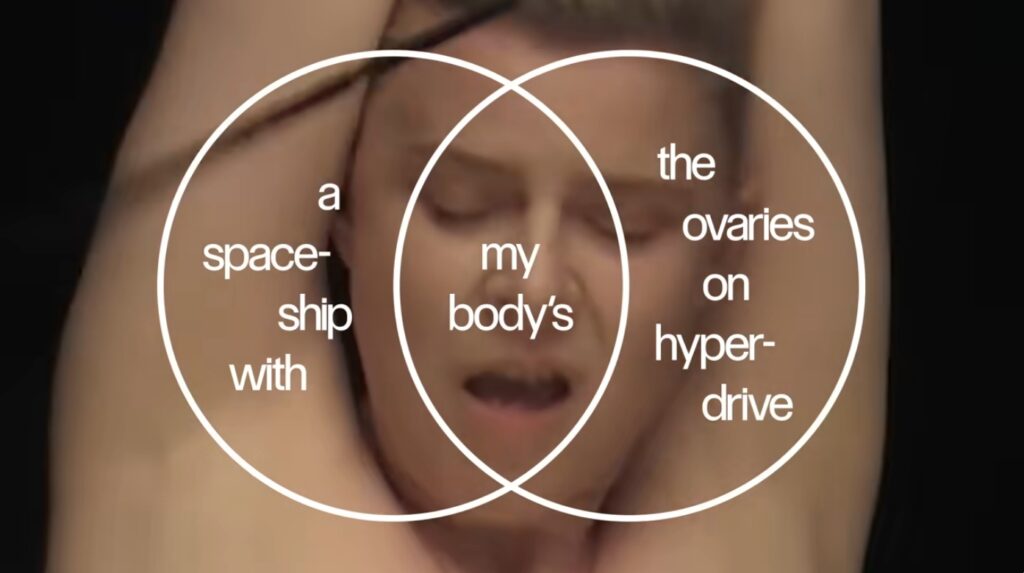
Challenges, like friction, demand endurance. Some require relinquishing control or fully sacrificing something from one’s life. For all their obstacles, challenges also present possibility, plus the exhilaration that comes with it. More than just a fun habit, Robyn’s latest song is part of her “purpose [which] is to be horny.” A duty, unlike a hobby, is a commitment, which promises eventual convenience on the condition that you meet it. For a better world to be built, effort needs to be made, sweat needs to be spilt, with no shortage of bumps and grinds.
In the interest of taking the tougher trail and thereby uncovering other possibilities, I encourage everyone to transition themselves off Spotify. Going further, I hope that people can all look towards ripping ourselves off the streaming model entirely, meaning that people give up our reliance on YouTube, Apple Music, and the like because of how it devalues music in a user’s eyes. The streaming model puts the ‘con’ in ‘convenience,’ a monkey’s paw whose powers come with sinister drawbacks. While I’ve not had the chance to pick up critic Liz Pelly’s MOOD MACHINE on the app as a whole, I thoroughly enjoyed this blurb from the New York Review of Architecture on how the app relies and counts on a user’s passive, uncritical listening: “A Spotify employee, one of [Pelly]’s sources, recalls Ek telling staff that the company’s only real competitor is silence. Trying to beat silence at its own game, it promoted a range of passive-listening playlists that displaced quiet without making any demand on the listener’s ears... ‘The conquest of chill reflects an industry content to profit from a world of disconnection,’ Pelly writes. ‘Capitalism both alienates us and sells us tools to distract us from the loneliness of nonstop alienated labor.’” Rather than encouraging digital crate-digging or active listening, Spotify’s model promotes complacency, and who could argue that the former are easier, or say, more convenient, than the latter?
For 2026, streaming and convenience are out, not because I say so, but because people know it to be true. An inconvenient truth to be sure, but one people need to start accepting. ‘In’ this year are friction, effort, initiative, problem solving, and, to combat streaming services, media that you own. Everyone has spent the last few years listening and learning about why streaming is bad – now is the time to lead by example. We are in the throes, but we are also in the know. Let’s all face the music (that you are paying for, file sharing, or getting from your local library). If you worry about life without music streaming, read these testimonials from people who gave it up, some including their digital MP3 libraries as well, for good: the lone downside listed by one person was a loss of convenience, but they, too, recognized that it came at a price that cost more than simply monetarily.
All this said, I could imagine a world where streaming is ethical, where artists are compensated properly and users have a better sense of how to use it, media training if you will, in ways that don’t encourage passive listening. But those changes will never come if people continue to use these tools as they are without any sacrifice, because that’s what it’s going to take: you may lose access to all the songs in the world, but know that you also won’t be contributing to the thing that robs musicians of their work’s value, and you won’t be conditioning yourself to accept this as the only way to listen to music. That last fact is something, based on my own inferences in the Tom’s Guide review, even passionate music fans have lost the joy of. Music discovery, like sifting through a pile of clothes at a thrift store, is work, and it can be social, too. Hell, I’m writing this article is because it provides me another outlet to discuss my feelings about art with friends. Spotify robbed us of this joy long before it ever took away showing which artists were in your friends’ libraries, and it will continue to if people keep thinking the inconvenience of losing it outweighs the problems it creates. In an age where we’re all being conditioned to think less and less, addressing problems instead of inconveniences goes a much longer way to a greater payoff.
I may not be psychic, but I can recognize the ways in which I can try to shape the future from where I stand. Agency is another quality that is undoubtedly, wholeheartedly in for 2026. The concept of adapting to and overcoming hardship rather than attempting the impossible of avoiding it entirely, the idea you might need to make an inconvenient or difficult decision. Friction is uncomfortable, but if you take it out, you miss the bumping and grinding that comes with it.
Let’s get uncomfortable and push.